
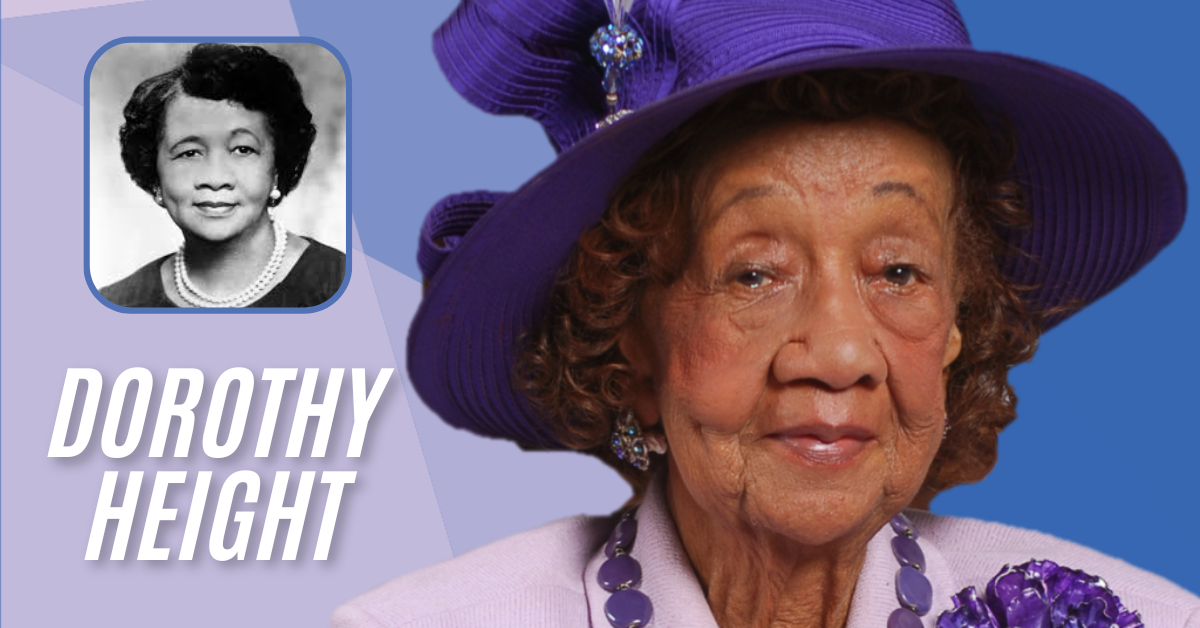
Have you ever heard of the “Godmother of the Civil Rights Movement”? That was the nickname given to Dorothy Height. She was a leader who worked alongside famous men like Dr. Martin Luther King Jr. While you might see her in old photos wearing a beautiful, bright hat, she was much more than a fashion icon. She was a brilliant organizer who spent her entire life fighting for fairness.
Dorothy Height believed that you couldn’t separate the fight for Black Americans from the fight for women. She saw that everyone deserved a seat at the table. Even when she wasn’t allowed to speak at big events, she was the one in the background making sure everything ran smoothly. Let’s explore the story of this amazing woman and how she changed our world for the better.
Biography of Dorothy Height
| Feature | Details |
| Full Name | Dorothy Irene Height |
| Date of Birth | March 24, 1912 |
| Place of Birth | Richmond, Virginia, USA |
| Education | New York University (BA & MA) |
| Key Role | President of NCNW (1957–1997) |
| Major Awards | Presidential Medal of Freedom, Congressional Gold Medal |
| Date of Death | April 20, 2010 |
| Famous Nickname | The Godmother of Civil Rights |
Early Life and a Turning Point
Dorothy Height was born in 1912 in Virginia. Later, her family moved to Pennsylvania. She was always a very smart student and a talented public speaker. In high school, she won a big speech contest. The prize was a scholarship to college! She wanted to go to Barnard College in New York City.
However, when she arrived, the school told her she couldn’t attend. Why? Because they already had two Black students and didn’t want any more. This was a “quota.” It was very unfair, but Dorothy did not give up. She went to New York University instead. She earned two degrees in just four years! This early experience with fairness made her want to fight for justice even more.
Joining the Fight for Justice
In the 1930s, Dorothy started her career as a social worker. She saw how much people were struggling during the Great Depression. She wanted to do more than just help individuals; she wanted to change the system. She joined the Harlem YWCA and began working to make sure Black women had better jobs and safer places to live.
One day in 1937, her life changed forever. She was chosen to escort First Lady Eleanor Roosevelt to a meeting. There, she met Mary McLeod Bethune, the founder of the National Council of Negro Women (NCNW). Mrs. Bethune saw something special in Dorothy. She invited her to join the movement, and Dorothy never looked back.
Leading the National Council of Negro Women
For 40 years, Dorothy Height served as the president of the NCNW. This was her biggest role. Under her leadership, the organization grew very strong. She focused on helping Black families stay together and succeed. She also worked on big issues like voting rights and better schools.
Dorothy was a master at bringing people together. She knew that if women worked together, they could move mountains. She helped set up programs to feed hungry children and provide training for jobs. Her work at the NCNW made it one of the most important groups in the country.
The Only Woman at the Table
During the 1960s, a group called the “Big Six” led the Civil Rights Movement. This group included leaders like Dr. Martin Luther King Jr. and John Lewis. Dorothy Height was often the only woman in the room when they planned their protests. She was a key advisor who helped them think about how their plans would affect women and children.
Even though she was a leader, she faced many challenges because she was a woman. For example, during the famous March on Washington in 1963, no women were allowed to give a major speech. Dorothy was on the stage, but she stayed quiet. However, she didn’t let that stop her. She kept working hard behind the scenes to make sure the march was a success.
Wednesdays in Mississippi
One of Dorothy’s most creative ideas was called “Wednesdays in Mississippi.” In the 1960s, the South was a very dangerous place for civil rights workers. Dorothy organized a program where groups of women—both Black and white—would travel from the North to Mississippi every Wednesday.
They would meet with local women to talk and build friendships. They also brought supplies for “Freedom Schools.” This project was very brave. It showed that people of different races could work together for peace. It helped break down the walls of segregation in a quiet but powerful way.
A Voice for Women Everywhere
Dorothy Height never stopped talking about “intersectionality.” This is a big word that means race and gender are connected. She taught the world that you can’t fix one problem without looking at the other. She wanted Black women to have the same opportunities as everyone else.
She helped found the National Women’s Political Caucus. This group encouraged women to run for office and vote. Dorothy wanted to make sure women’s voices were heard in the government. She was a mentor to many younger activists, teaching them how to lead with kindness and strength.
The Signature Style: Those Famous Hats
If you look at pictures of Dorothy Height, you will notice she almost always wore a beautiful hat. She had hundreds of them! To her, a hat was more than just clothing. It was a sign of dignity and self-respect. She believed that when you are fighting for your rights, you should always look your best.
Her hats became so famous that a musical was even written about them called “If This Hat Could Talk.” People loved her style because it matched her personality. She was elegant, strong, and always ready for business. Even in her 90s, she would attend meetings in a perfectly matched hat and pearls.
Awards and Global Influence
Because she worked so hard for so long, Dorothy received many honors. President Bill Clinton gave her the Presidential Medal of Freedom in 1994. Later, in 2004, she received the Congressional Gold Medal. These are the two highest honors a person can get in the United States.
She also traveled all over the world. She went to India, Africa, and Europe to talk about human rights. She was a global leader who believed that everyone, no matter where they lived, deserved to be free and treated with respect. Her influence stretched far beyond the borders of America.
A Legacy that Lives On
Dorothy Height passed away in 2010 at the age of 98. Even in her final years, she was still active. She attended the inauguration of President Barack Obama and sat in a place of honor. He called her a hero and a “godmother” to the nation.
Today, her work continues through the NCNW and the Dorothy I. Height Leadership Institute. She showed us that leadership isn’t always about being the loudest person in the room. Sometimes, it’s about being the person who never quits and always keeps their eyes on the prize.
Why Dorothy Height Matters Today
We remember Dorothy Height because she reminds us that the fight for justice takes a long time. She didn’t get discouraged when things were slow. She kept pushing for decades. Her life is a lesson in patience and “servant leadership.”
She also reminds us to look out for everyone. She didn’t just fight for herself; she fought for the most vulnerable people in society. In a world that can sometimes feel divided, her message of unity and working together is more important than ever. She truly “ripened the time” for future generations.
Conclusion
Dorothy Height was a pioneer who opened doors for millions of people. From her early days facing unfair quotas to her time advising presidents, she remained humble and focused. She proved that one person can make a massive difference if they have the courage to stand up for what is right.
As we look back on her legacy, we should all try to be a little bit more like Dorothy. We can lead with grace, speak up for others, and never give up on the dream of equality. She was a true queen of the movement, and her crown—or in her case, her hat—will never fade.
🔴 MUST READ: Mariah Bird: Facts, Age, and Family Guide
Would you like to learn more about the other “Big Six” leaders she worked with? Let us know in the comments!
Frequently Asked Questions
Dorothy Height was a famous civil rights and women’s rights activist. She led the National Council of Negro Women (NCNW) for 40 years and was a key figure in the American Civil Rights Movement.
She earned this nickname because she was a wise and steady leader who mentored many others. She was often the only woman working alongside top leaders like Dr. Martin Luther King Jr.
Her biggest achievements include desegregating the YWCA, organizing the “Wednesdays in Mississippi” project, and leading the NCNW through the most critical years of the civil rights struggle.
For Dorothy, wearing a hat was a symbol of dignity and professional pride. It became her trademark style, representing the strength and grace of Black women in leadership.
She received many honors, most notably the Presidential Medal of Freedom (1994) and the Congressional Gold Medal (2004). These are the highest civilian awards in the U.S.
No, she was not allowed to speak, even though she was one of the chief organizers. At the time, women were mostly kept out of the spotlight, but she continued to lead from behind the scenes.