The traditional lecture hall is undergoing a massive transformation. For decades, the standard image of higher education involved a professor at a podium and rows of students taking frantic notes. But as we move further into 2026, that image is fading. In its place is a dynamic, interactive, and often competitive environment driven by gamification. This isn’t about playing video games in class; it is about taking the elements that make games addictive—competition, achievement, and immediate feedback—and applying them to complex academic subjects.
For the next generation of global scholars, engagement is the ultimate currency. With shorter attention spans and a digital-first mindset, students today require more than just passive reading. They need to be active participants in their own learning journey. Gamification provides the bridge between academic rigor and the interactive experiences students have grown to expect from the digital world.
The Psychology Behind Game-Based Learning
To understand why gamification works, we have to look at how our brains process rewards. When a student completes a difficult level in a game, their brain releases dopamine. This creates a sense of accomplishment that encourages them to keep going. In an educational setting, replacing a traditional “test” with a “quest” or a “challenge” triggers that same psychological response.
This approach is particularly effective in complex social sciences. For instance, many students seeking psychology assignment help find that understanding human behavior becomes much easier when they can see these theories in action through simulated social environments. By turning a case study into a role-playing scenario, the abstract concepts of the human mind become tangible and much easier to grasp.
Breaking Down the Mechanics of the Modern Classroom
What does gamification actually look like in a university setting? It usually involves several key mechanics that move beyond simple points and badges.
- Progression Bars: Instead of seeing a syllabus as a list of chores, students see a visual map of their progress. As they complete modules, their bar fills up, giving them a constant visual reminder of how far they have come.
- Leaderboards: Healthy competition can drive excellence. When students see where they stand in relation to their peers, it often pushes them to put in that extra bit of effort on their projects.
- Instant Feedback Loops: In a traditional setting, a student might wait weeks to get a grade back. In a gamified system, they know immediately if they have mastered a concept. This allows them to pivot and improve in real-time.
Bridging the Global Achievement Gap
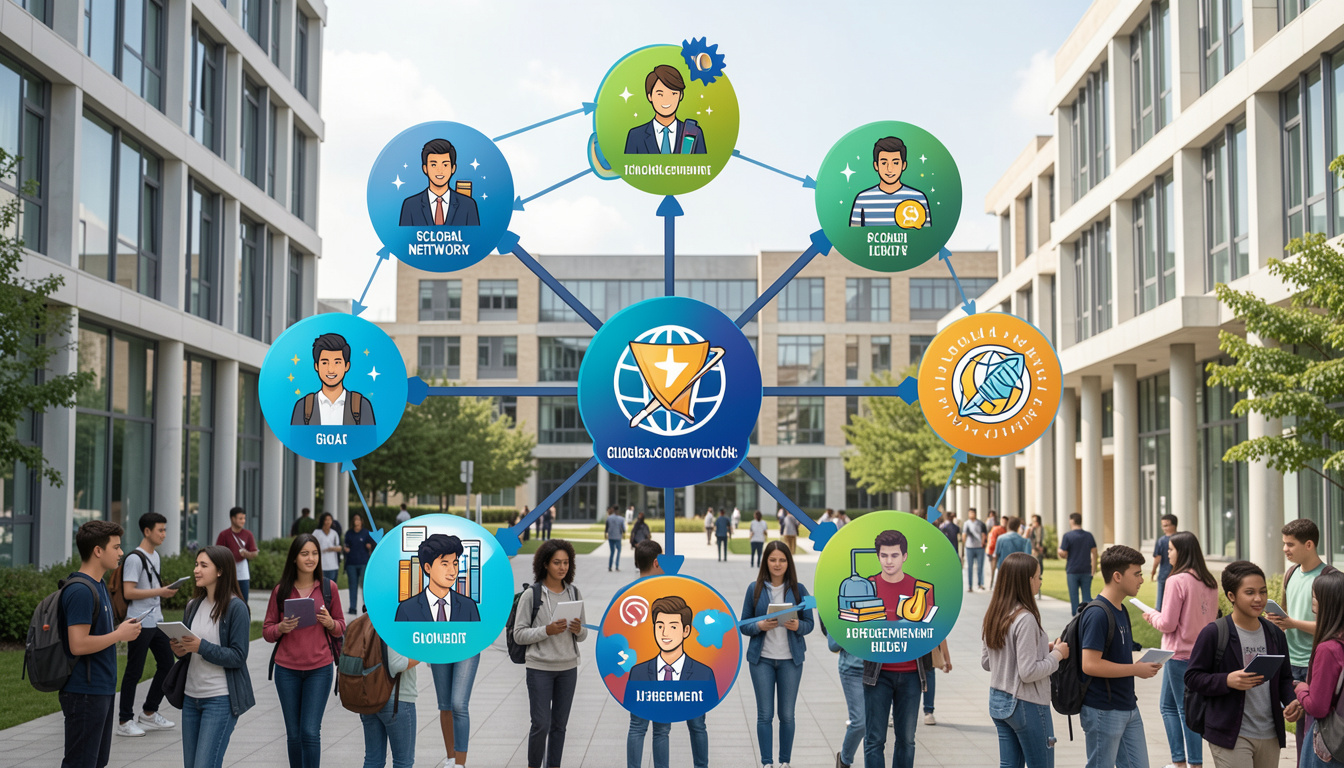
One of the most significant benefits of gamification is its ability to reach students across different cultures and backgrounds. Because the “language” of games is universal, international students often find these systems more accessible than dense, text-heavy traditional curricula.
Whether a student is studying in London, New York, or Sydney, the drive to achieve a “High Score” or unlock a “Mastery Badge” remains the same. This creates a more level playing field where effort and engagement are rewarded just as much as prior knowledge. However, the transition to these high-tech systems can be challenging. Many students find themselves needing professional writing assignment help to bridge the gap between their interactive classroom experiences and the formal essays still required for their final portfolios.
Addressing the Skepticism: Is it “Too Much Fun”?
Critics of gamification often worry that it “dumb downs” the curriculum. They argue that higher education should be serious and that making it “fun” might detract from the depth of the material. However, the data suggests the opposite. When students are engaged, they spend more time with the material. They aren’t just memorizing facts for an exam; they are exploring a system, failing safely, and trying again until they succeed.
This “safe failure” is perhaps the most vital part of the gamified experience. In a traditional exam, a mistake is a permanent stain on a GPA. In a game, a mistake is just a lesson learned before the next attempt. This reduces academic anxiety and fosters a “growth mindset” that is essential for success in the modern workforce.
The Role of Technology in 2026
The technology supporting gamification has come a long way. We are now seeing the integration of Augmented Reality (AR) and Virtual Reality (VR) into these systems. Imagine a history student “walking” through a digital reconstruction of ancient Rome to find “clues” for their research paper, or a medical student performing a simulated surgery where every correct move earns them points toward their certification.
This level of immersion ensures that the scholars of tomorrow are not just spectators of history or science—they are practitioners. The digital tools provide a scaffold that supports the student, allowing the professor to act more as a “coach” or “game master” rather than a gatekeeper of information.
Preparing for the Future of Work
The world beyond the university gates is also becoming increasingly gamified. From fitness apps that track our steps to corporate training modules that use leaderboards, the skills learned in a gamified classroom are directly transferable to the 2026 job market. Students who learn how to navigate these systems, collaborate in digital teams, and pursue long-term goals through incremental achievements will be better prepared for the future.
As we look forward, the goal is not to eliminate traditional study but to enhance it. By combining the deep research and critical thinking of classic academia with the high-engagement tactics of modern gaming, we can create an educational system that is both rigorous and genuinely exciting.
Conclusion
The shift toward gamification is a recognition that the way we consume information has changed forever. For the global scholar, this is an era of unprecedented opportunity. Learning is no longer a static process restricted to the library; it is a vibrant, interactive journey that spans the globe.
While the methods of delivery may change, the core of a good education remains the same: the pursuit of truth, the mastery of skills, and the development of a critical mind. Whether you are navigating a digital simulation or writing a complex thesis, the key is to stay curious, stay engaged, and never stop leveling up your knowledge.