
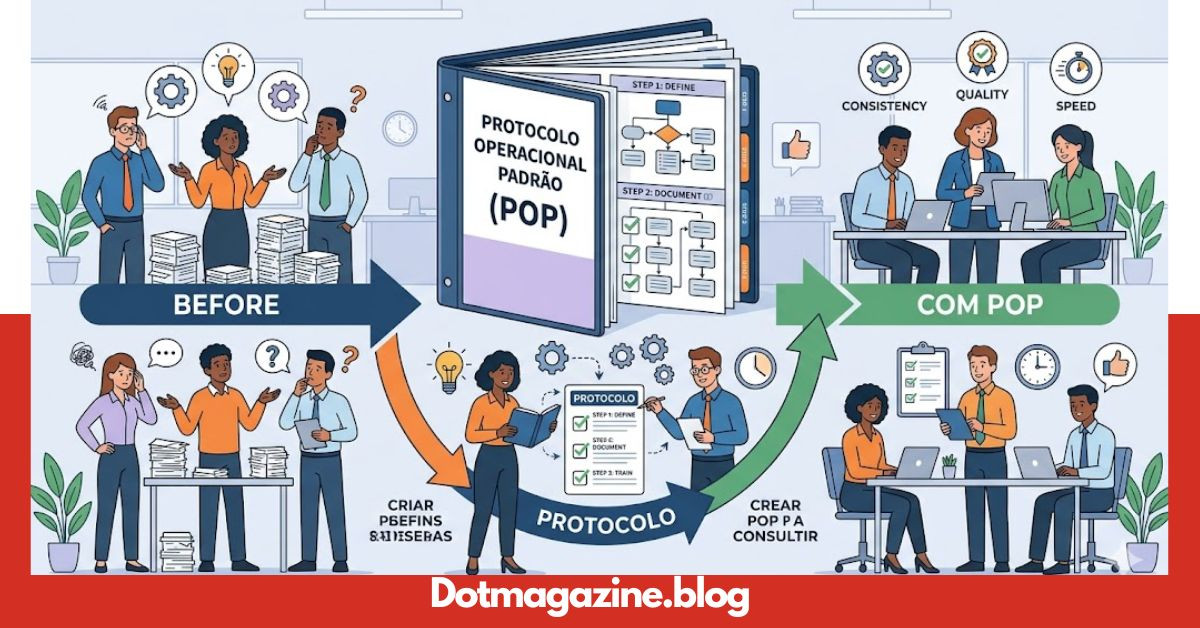
What is a Protocolo Operacional Padrao? The Ultimate Guide to SOPs
Have you ever felt like your business or project is a bit of a mess? Maybe one person does a task one way, and another person does it completely differently. This is where a protocolo operacional padrao comes to the rescue. Think of it like a recipe for a cake. If everyone follows the same recipe, the cake tastes great every single time. In the world of business, we call this an SOP. It is a simple document that tells everyone exactly how to do a job. When you use a protocolo operacional padrao, you stop guessing and start growing.
I remember helping a friend who was struggling with their small online shop. They were spending hours answering the same questions and fixing mistakes. We sat down and wrote a simple protocolo operacional padrao for packing orders. Suddenly, the mistakes stopped. It felt like magic, but it was just good planning. By the end of this guide, you will know how to create these documents yourself. We will use simple words and clear steps so you can get started today. Let’s dive into how a protocolo operacional padrao can change the way you work.
What Exactly is a Protocolo Operacional Padrao?
A protocolo operacional padrao is a set of step-by-step instructions. Its main goal is to help workers carry out complex routine operations. Imagine a pilot before takeoff. They don’t just wing it; they have a checklist. That checklist is their protocolo operacional padrao. It ensures safety, quality, and consistency. Whether you are making coffee or building a car, having a clear plan is the key to success.
Why Your Business Needs a Protocolo Operacional Padrao
Without a protocolo operacional padrao, knowledge stays in people’s heads. If your best employee leaves, the knowledge leaves with them. That is a big risk! A protocolo operacional padrao acts as a brain for your company. It keeps your secrets safe and your quality high. It also makes training new people much faster. Instead of watching them for weeks, you can give them the document and guide them through it.
The Key Benefits of Using SOPs Every Day
Using a protocolo operacional padrao saves you time and money. When everyone knows what to do, there is less waste. You don’t have to redo work because it was done wrong the first time. It also improves safety. In many jobs, doing things the wrong way can be dangerous. A clear protocolo operacional padrao keeps everyone safe by following proven steps. Plus, it makes your customers happy because they get the same great service every time they visit.
How to Write Your First Protocolo Operacional Padrao
Starting might feel hard, but it is quite simple. First, pick a task that happens often. Then, watch someone do that task and write down every single step. Don’t leave anything out! A good protocolo operacional padrao should be so clear that a 5th grader could understand it. Use action verbs like “Press,” “Type,” or “Clean.” This makes the instructions easy to follow. Once you have a draft, let someone else try to follow it to see if they get stuck.
Essential Elements of a Great SOP Document
Every protocolo operacional padrao needs a few basic parts. You need a title so people know what it is. You need a purpose to explain why the task matters. Then, you list the steps in order. It is also smart to list the tools needed. For example, if the protocolo operacional padrao is for cleaning a floor, list the mop and bucket first. This way, the worker doesn’t have to stop halfway through to find what they need.
Comparison of Work Styles
| Feature | Without a Protocolo Operacional Padrao | With a Protocolo Operacional Padrao |
| Consistency | Low – everyone does it differently | High – same results every time |
| Training Time | Very long and stressful | Short and organized |
| Mistakes | Common and expensive | Rare and easy to fix |
| Safety | Risky | Much safer |
| Business Growth | Hard to scale | Easy to expand |
Common Mistakes to Avoid When Creating SOPs
One big mistake is making the protocolo operacional padrao too long. If it is fifty pages, nobody will read it. Keep it short and use pictures if you can. Another mistake is writing it and then forgetting it. A protocolo operacional padrao should be a living document. As technology changes or you find a better way to work, you must update it. If your team sees that the document is old, they will stop using it. Keep it fresh!
How to Get Your Team to Use the New Protocol
It is one thing to write a protocolo operacional padrao, but it is another to get people to use it. Talk to your team first. Ask for their advice while you are writing it. If they help create the protocolo operacional padrao, they will be more likely to follow it. Show them how it makes their job easier. Explain that it isn’t about “policing” them, but about making the day run smoother for everyone.
Using Technology to Manage Your Protocols
You don’t just have to use paper and pens. Many apps can help you manage your protocolo operacional padrao library. Digital tools allow you to add videos, which are great for visual learners. A digital protocolo operacional padrao can be updated instantly for everyone in the company. This is much better than printing a hundred new copies every time a small step changes. It keeps everyone on the same page, literally!
Measuring the Success of Your New Workflows
How do you know if your protocolo operacional padrao is working? Look at the numbers. Are there fewer customer complaints? Is the work getting done faster? If you see improvements, your protocolo operacional padrao is doing its job. If things are still messy, sit down with the team. Ask them which part of the protocolo operacional padrao is confusing. Constant improvement is the secret to a high-ranking and successful business.
Final Thoughts on Organizational Excellence
Building a protocolo operacional padrao is an investment in your future. It might take a little time today, but it saves you thousands of hours tomorrow. It creates a professional environment where everyone can win. When you have a solid protocolo operacional padrao, you can finally step back and focus on the big picture. You are no longer just putting out fires; you are building a lasting legacy.
Frequently Asked Questions
The best person to write it is usually the person who does the job every day, with help from a manager to keep it organized.
Check them at least once a year. If you get new equipment or software, update the protocolo operacional padrao immediately.
Yes! Even if you are a “team of one,” an SOP helps you stay consistent and prepares you for when you hire your first helper.
Break it down! You can have one main protocolo operacional padrao that links to smaller, more specific ones.
Photos are not required, but they help a lot. A picture of a finished product shows the worker exactly what the goal is.
No. A policy is a rule (like “No Smoking”), while a protocolo operacional padrao is a “how-to” guide for a specific task.
Conclusion
Don’t wait for a big mistake to happen before you start your protocolo operacional padrao. Pick one simple task this afternoon and write down the steps. You will be surprised at how much better you feel once it is out of your head and on paper. This is the first step toward a more relaxed and successful work life. Start writing, keep it simple, and watch your efficiency soar!