
Sagės: The Ultimate Guide to Modern Brooches and Timeless Pins
Hello there! Have you ever looked at an old photo of your grandmother and noticed a shiny pin on her coat? Or maybe you’ve seen a modern star wearing a bold piece of jewelry on their jacket lapel? Those beautiful items are called sagės. While some might think of them as “just pins,” they are actually powerful fashion tools. I’ve always found that adding a single piece of jewelry like this can turn a boring outfit into something truly special. Let’s dive into the world of these amazing accessories!
Everything You Need to Know About Sagės
| Feature | Description |
| Common Name | Brooches or Decorative Pins |
| Primary Use | Decoration, fastening clothes, and showing style |
| Materials | Silver, gold, amber, enamel, and gemstones |
| Popular Shapes | Flowers, animals, geometric patterns, and symbols |
| Fastener Type | Safety pin back, hinged pin, or magnetic clasp |
| Where to Wear | Lapels, scarves, hats, sweaters, and even bags |
What Exactly are Sagės?
At their simplest, sagės are decorative jewelry items designed to be attached to clothing. Unlike a necklace or a ring, they don’t loop around a body part. Instead, they pin directly onto your fabric. They have been around for thousands of years. Long ago, people used them to hold their cloaks together. Today, we use them mostly for fashion. They come in every size imaginable, from tiny silver dots to large, sparkling flowers that catch everyone’s eye.
A Quick Trip Through History
The history of sagės is really fascinating. In ancient times, they were called “fibulae.” People made them from thorns, bone, or simple metals to keep their clothes from falling off! As time went on, they became symbols of power. Kings and queens wore them encrusted with diamonds and rubies. In my own research, I’ve found that even Vikings used large circular pins to secure their heavy wool capes during cold winters. They weren’t just pretty; they were a survival tool.
Why These Pins are Making a Comeback
You might have noticed sagės appearing on fashion runways lately. Why? Because they are incredibly versatile! Fashion is all about expressing yourself, and a brooch is like a little badge of personality. Whether it’s a vintage find from a thrift store or a modern piece of art, these pins help you stand out. I love how they bridge the gap between “old-fashioned” charm and “new-age” cool. They prove that good style never really goes away.
Different Types for Every Style
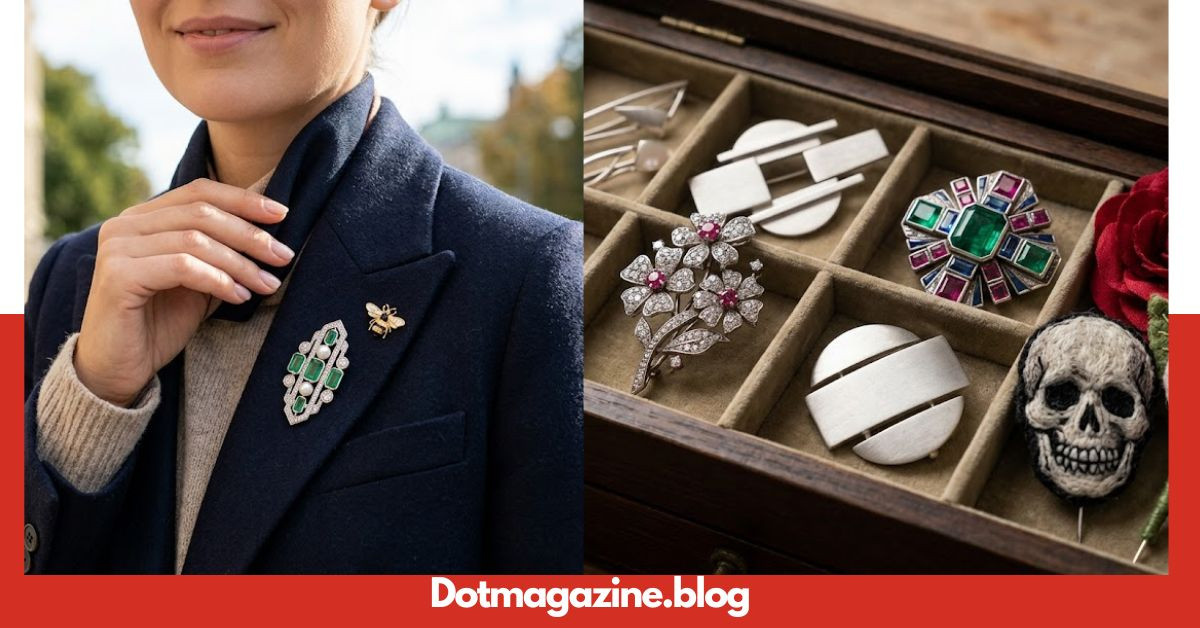
There isn’t just one kind of sagės. There are “Cameo” pins which show a carved face, and “En Tremblant” pieces that actually move or “tremble” when you walk! You can find minimalist metal designs for a clean look, or “Art Deco” styles with bold, bright colors. Some are even made with fabric or felt for a soft, handmade feel. No matter what your personal vibe is—whether you like spooky skulls or delicate roses—there is a pin out there for you.
How to Style Them the Modern Way
Wearing sagės doesn’t mean you have to look like you’re from the 1800s. A great modern trick is to pin one onto a denim jacket or the corner of a beanie hat. I recently saw someone use a large brooch to close a cardigan instead of using the buttons, and it looked amazing! You can also cluster three or four small pins together on one side of a blazer. This “stacking” method is a huge trend right now and adds a lot of texture to your look.
Materials That Make Them Shine
What are sagės made of? Most high-quality ones use precious metals like sterling silver or gold plating. In many cultures, using natural amber is very popular because it looks like captured sunshine. You will also see enamel, which is a type of colored glass fused to metal. This allows for very bright and detailed pictures on the pin. Some modern artists even use recycled materials or wood to create eco-friendly jewelry that feels grounded and natural.
Caring for Your Jewelry Collection
If you start collecting sagės, you’ll want to keep them looking bright. Since they have sharp pins, always store them in a soft pouch so they don’t scratch your other jewelry. I always suggest wiping them down with a soft cloth after wearing them to remove any oils from your skin. If the pin back feels loose, a quick trip to a jeweler can fix it. Taking care of these small treasures ensures they can be passed down to the next generation.
The Symbolism Behind the Pin
Sometimes, sagės carry a hidden meaning. For example, a poppy pin might be worn for remembrance, or a specific animal might represent a person’s spirit. Many families have “heirloom” pins that are passed down during weddings. When you wear one, you aren’t just wearing a piece of metal; you might be wearing a story. It’s a great way to start a conversation with someone—just wait for them to ask, “Oh, where did you get that beautiful pin?”
Choosing the Perfect Gift
If you are looking for a gift, sagės are a fantastic choice. Why? Because you don’t need to know the person’s ring size or neck measurements! You just need to know what they like. For a friend who loves gardening, a leaf-shaped pin is perfect. For someone who loves old movies, a sparkling vintage star might be the way to go. It’s a thoughtful, personal gift that feels much more special than a standard gift card.
Where to Find the Best Pieces
Finding unique sagės is like a treasure hunt. Antique shops and flea markets are the best places to find one-of-a-kind vintage items. If you prefer something new, many independent artists sell handmade pins online. I personally love looking for local craft fairs where I can meet the person who actually made the piece. It adds a whole new layer of meaning to the jewelry when you know the hands that created it.
Frequently Asked Questions
It’s best to be careful! Heavy sagės can pull on thin fabric and leave a hole. If you want to wear one on a t-shirt, try a very small, lightweight pin, or pin it through the seam of the shoulder where the fabric is stronger.
Not at all! Many men wear them on suit lapels or even on the ties of their hats. It is a classic look that works for everyone, regardless of gender.
Look for “safety” clasps that have a little revolving lock. If your pin doesn’t have one, you can buy small rubber “pin backs” (the kind used for enamel lapel pins) to slide onto the needle for extra security.
Yes! Stacking multiple sagės is a fun way to show off a collection. Just try to keep them in a similar color family or theme so it doesn’t look too messy.
The terms are often used interchangeably. However, “brooch” usually refers to a larger, more ornate piece with a horizontal pin, while “pin” is a more general term for anything that pokes through fabric.
Amber is excellent! It is very light, so it won’t weigh down your clothes as much as heavy stones like lead crystal or thick metal might.
Conclusion
In the end, sagės are much more than just old-fashioned accessories. They are a bridge between history and modern style, allowing us to express our creativity in a small but powerful way. Whether you are pinning a tiny silver bird to your scarf or a large amber flower to your coat, you are participating in a tradition that is thousands of years old.
Have you ever found a beautiful old pin in a jewelry box? Or do you have a favorite way to wear yours? Leave a comment below and share your style tips with us!