From Startup to Scale-Up: When Is the Right Time to Invest in an Automatic Liquid Filling Machine?
Every product-based business reaches a turning point. Orders start coming in faster than your team can handle. Your manual filling process — once perfectly manageable — begins to slow everything down. Bottles are inconsistently filled, wastage creeps up, and your team is exhausted from repetitive tasks.
If you’re nodding along, you’re probably closer to needing an automatic liquid filling machine than you think.
But knowing when to make that investment is just as important as knowing why. Many businesses either jump too early — before they have the volume to justify it — or wait too long, losing money, customers, and momentum in the process. This article breaks down exactly where that tipping point is, and how to recognise it before it costs you.
The Manual Filling Stage: Where Every Business Starts
There’s nothing wrong with starting manually. In the early days, hand-filling bottles, jars, or containers makes complete sense. Your volumes are low, your product range is small, and the flexibility of doing it by hand suits the unpredictable nature of a new business.
But manual filling comes with real limitations — and they compound quickly as your business grows:
- Inconsistency — No matter how skilled your team is, humans simply cannot fill containers to the exact same level every single time. That means variable product weight, potential compliance issues, and a presentation that lacks the professionalism your brand deserves.
- Speed — A person filling by hand can only work so fast. As order volumes increase, you either hire more staff, ask your existing team to work longer hours, or fall behind on fulfilment.
- Wastage — Overfilling, spills, and inconsistent pours all add up. Whether you’re filling food and beverage products, cosmetic formulas, pharmaceutical liquids, or industrial cleaning solutions — every drop that doesn’t make it into the bottle is money lost.
The Signals That Tell You It’s Time
So how do you know when manual filling has run its course? Here are the clear signals to watch for:
- You’re consistently missing fulfilment deadlines — If your team is regularly working overtime just to keep up with orders, your process can’t scale with your demand.
- Your wastage is eating into your margins — For many businesses, the amount of product lost through overfilling and spills is surprisingly high — and it only becomes visible when you actually measure it.
- Quality complaints are increasing — Inconsistent fill levels don’t just affect your bottom line — they affect your reputation. Whether you’re supplying a retailer with food products or a pharmacy with veterinary solutions, consistency is non-negotiable.
- You’re turning down orders — If you’re saying no to new customers or larger orders because you don’t have the capacity, you’re actively limiting your own growth.
- Your team is burning out — Repetitive manual filling is physically demanding and monotonous. High staff turnover in your production team is a sign that your process needs a mechanical solution, not more people.
What an Automatic Liquid Filling Machine Actually Changes
Once you make the switch to automation, the impact is felt almost immediately across your entire operation.
Consistency Becomes a Given
Automatic filling machines are engineered to deliver the same fill volume every single time, regardless of how many hours they’ve been running. Whether you’re filling 100 bottles or 10,000 — be it a cosmetic serum, a detergent, a beverage, or a pharmaceutical liquid — each container comes out exactly right.
Speed Increases Dramatically
Depending on the machine and your product, you can go from filling a handful of containers per minute manually to dozens per minute automatically. That’s not just faster — it’s a completely different production capacity that opens the door to retail supply, export, and bulk order fulfilment.
Wastage Drops Significantly
Precision filling means you’re putting exactly the right amount of product into every container. For industries like pharmaceuticals, cosmetics, and food and beverage — where ingredient costs are high — the savings from reduced wastage alone can be significant.
Your Team Is Freed Up
Instead of spending their entire shift on repetitive filling tasks, your staff can focus on quality control, packaging, logistics, and other higher-value activities that actually move your business forward.
You Can Take On Bigger Orders
With the capacity to produce more, faster, you’re no longer turning away business. You can confidently quote for larger contracts, retail supply agreements, and opportunities that were previously out of reach.
Choosing the Right Machine for Your Stage of Growth
Not every automatic liquid filling machine is the same, and the right choice depends heavily on where your business currently sits.
- Early stage — A semi-automatic or benchtop filling machine can be an ideal first step. These machines give you the consistency and speed benefits of automation without the full capital outlay of a high-volume production line.
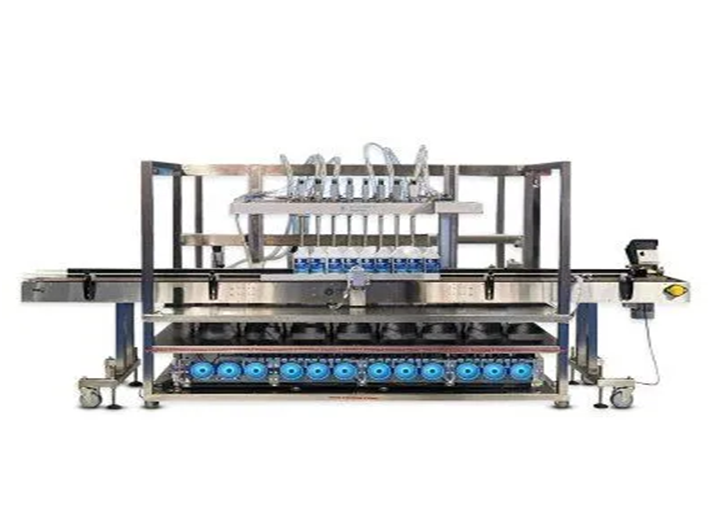
- Growing stage — Fully automatic inline filling systems that integrate seamlessly with cappers, labellers, and conveyors create a complete production line. This is where the real efficiency gains happen.
- Scaling stage — A fully automated line reduces labour requirements, maximises throughput, and gives you the kind of output that supports serious commercial growth.
It’s also worth considering the viscosity and nature of your product. Thin, water-like liquids such as beverages or pharmaceutical solutions behave very differently to thick creams, pastes, or industrial cleaning concentrates. The right machine should handle your specific product type with precision, and an experienced supplier will help you match the right solution to your exact requirements.
The Investment Question: Is It Worth It?
This is the question every business owner asks — and the honest answer is that for most growing manufacturers, the return on investment is clear.
When you factor in:
- Reduced product wastage
- Lower labour costs
- Faster output and higher throughput
- Fewer filling errors and quality issues
- The ability to take on larger orders across food, cosmetics, pharmaceutical, and industrial sectors
…the financial case for automation becomes compelling. Many businesses find that their machine pays for itself within the first year of operation.
There’s also the question of future-proofing. Buying the right machine now means you’re building a production process that can grow with you, rather than patching over the cracks of a manual system with more staff and more hours.
The Bottom Line
The right time to invest in an automatic liquid filling machine isn’t when things have completely broken down — it’s just before they do. When the signals start showing up, when growth is being held back, when wastage and inconsistency are becoming real problems, that’s the moment to act.
The businesses that scale successfully are the ones that invest in their production process ahead of demand, not in response to it. If you’re ready to take that step, Packserv has the expertise, the machinery range, and the support to help you build a production line that grows with your business.